Back to Projects

Looker Studio Marketing Analytics Dashboard

Unified GHL, Google Ads, Meta Ads, and GA4 data into a single Looker Studio dashboard with lead-to-revenue attribution.

2025 Analytics Engineer Analytics
Looker StudioGA4Google AdsMeta AdsGHL APIBigQuery
taimoorakhtar.com/projects/looker-marketing-dashboard
Looker Studio Marketing Analytics Dashboard

Introduction

A multi-channel agency owner had data scattered across 7 platforms. Monthly client reports took 5+ hours to assemble manually. Worse, no one could answer the actual question — 'which ad campaigns are producing real revenue, not just leads?' The answer required stitching ad spend to leads to closed deals.

The Challenge

Marketing attribution sounds easy until you try it. Ad platforms report leads. CRMs report deals. Joining the two requires tracking the entire journey — and most CRM data lives in walled gardens that don't talk to Looker natively. Plus every platform's data refresh cadence is different.

The Solution

Built a Looker Studio dashboard with a BigQuery middle layer that ingests GHL data via API, joins it to GA4 and ad platform data, and produces unified attribution reporting. Lead-to-revenue traced from ad click through to closed deal stage, with cost-per-revenue metrics by campaign.

Technical Deep Dive

1
BigQuery ingestion layer. Scheduled queries pull GHL data via the API daily. GA4 connector in native. Google Ads and Meta Ads via their respective Looker connectors. Normalized into a single fact table per event type.
2
UTM tracking enforcement. All client landing pages updated with consistent UTM parameter conventions. GHL custom fields capture UTM source/medium/campaign on lead creation. Foundation for all downstream attribution.
3
Attribution model. Last-touch by default with first-touch comparison view. Conversion event defined as deal moved to 'Closed Won' in GHL pipeline, not just 'lead created'.
4
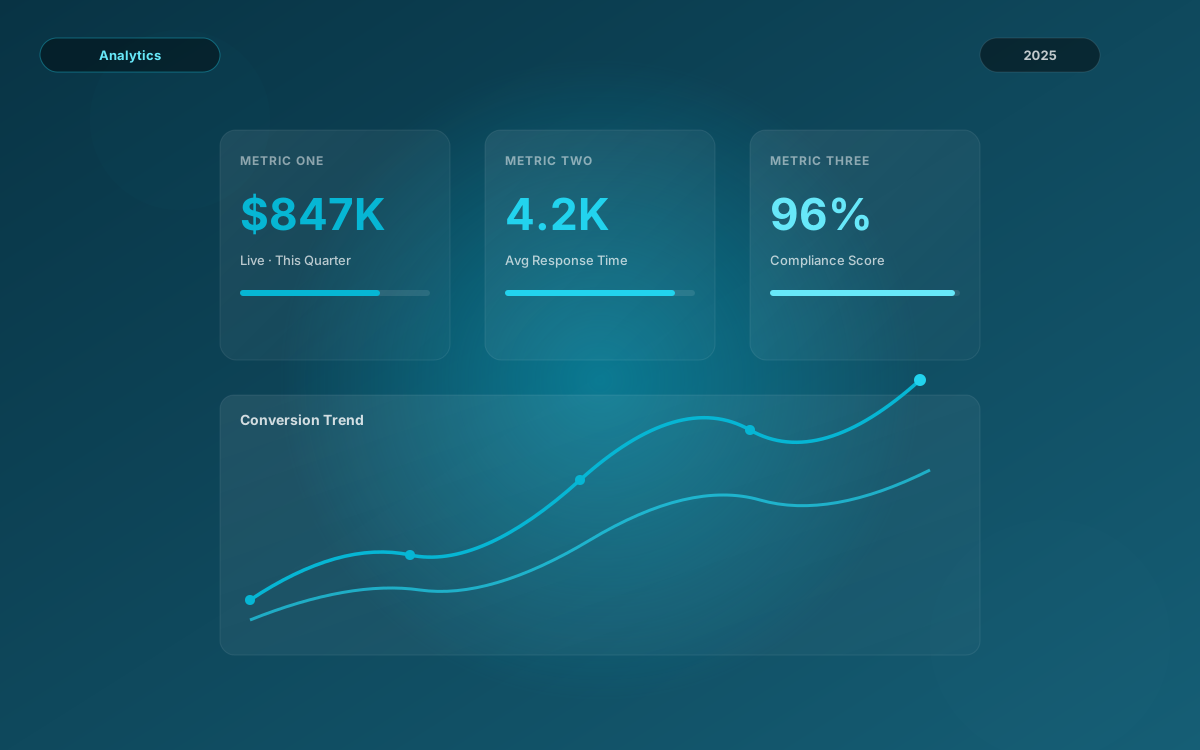
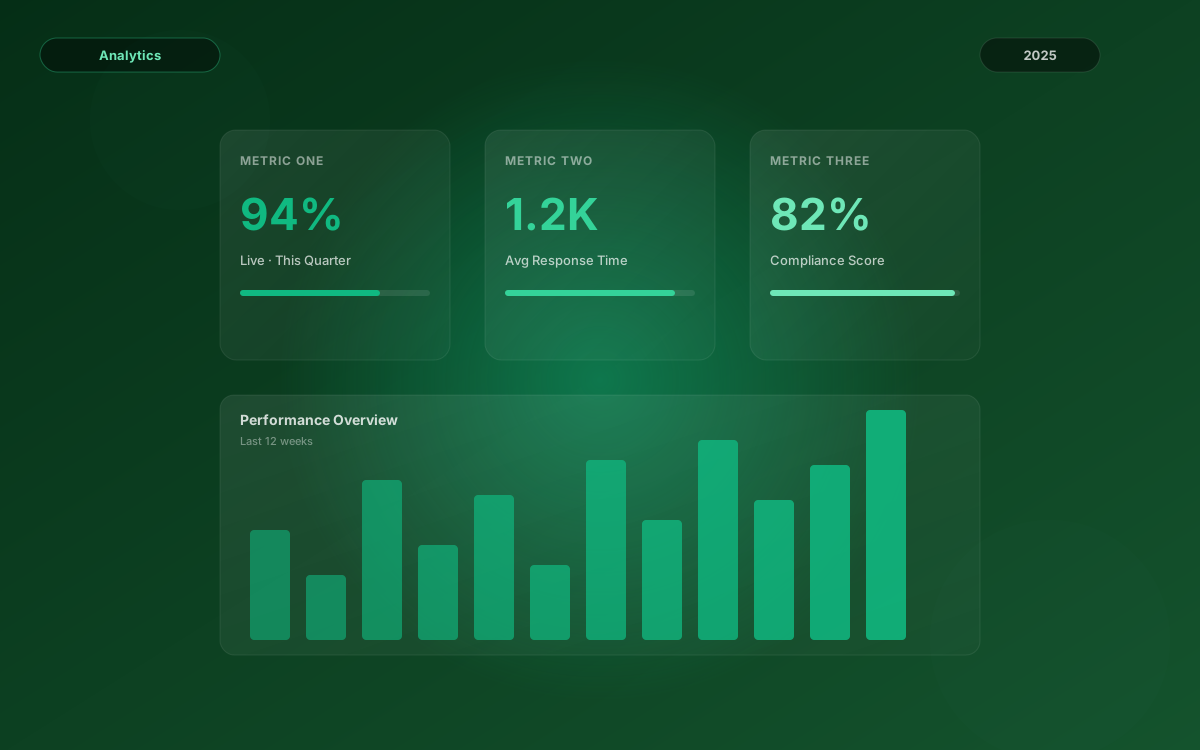
Dashboard structure. Top tile: spend, leads, deals, revenue, cost-per-revenue. Mid: campaign-level table sortable by any metric. Bottom: funnel visualization by source with conversion rates at each stage.
5
Client self-serve filters. Date range, channel, campaign, and pipeline stage all filterable. Clients explore independently between monthly review meetings.
Key Features

Results & Impact

  • Monthly report assembly time: 5 hours → 25 minutes
  • Client identified $14K/month in underperforming ad spend in first month
  • Cost-per-revenue metrics surfaced campaigns that produced leads but no deals
  • Self-serve adoption reduced ad-hoc reporting requests by 70%

Lessons Learned

"Attribution starts with UTM hygiene. If your tracking parameters are inconsistent, no dashboard can save you."
"Last-touch attribution is the right default — it's defensible and explainable. Multi-touch models are overengineered for most clients."
"Self-serve dashboards reduce client check-in load by 70%. Build for exploration, not just reporting."

Related Work

Have a similar build in mind?

I'm available for engagement on GoHighLevel implementations, A2P 10DLC compliance, AI automation pipelines, and CRM migrations. Most projects start at $300–$1,200 depending on scope.